A brake pedal can change so gradually that you don’t notice it right away. Maybe you start using a little more leg pressure at stoplights, or the pedal feels especially firm when backing out of the driveway first thing in the morning. Then one day you drive another vehicle and realize how much harder your own brakes have become to press.
That change is worth checking. A firm pedal doesn’t automatically mean the brake pads are worn out, and it doesn’t always point to the same repair. Brake assist problems, vacuum leaks, hydraulic restrictions, sticking brake parts, or even something affecting engine vacuum can all change how much effort it takes to stop the car.
Brake Assist May Not Be Doing Its Full Job
Most drivers don’t realize how much help the brake booster provides until that assistance starts to disappear. On many gasoline-powered vehicles, the booster uses engine vacuum to multiply the force from your foot before it reaches the master cylinder. Without that help, the brakes still have a mechanical connection, but the pedal takes far more effort.
A booster problem can start intermittently. The pedal might feel normal while cruising and become harder after several quick brake applications, or the problem may be strongest at idle. When we inspect this complaint, we compare pedal feel with the engine running and off, then check whether the booster is receiving and holding the vacuum it needs.
A Vacuum Leak Can Feel Like a Bad Brake Booster
The booster is connected to a vacuum source through a hose and usually a one-way check valve. A cracked hose, loose connection, leaking fitting, or failed check valve can reduce assist even when the booster itself is still good.
The pattern can give us useful clues. A driver may notice:
- Pedal gets harder after two or three quick presses
- Brakes feel easier with higher engine RPM
- A hissing sound appears near the pedal or engine compartment
- Engine idle changes when the brake is pressed
- Pedal is unusually hard after the vehicle sits overnight
Those symptoms don’t prove which component has failed. They tell us the vacuum side of the brake-assist system deserves testing before replacing expensive parts.
Some Vehicles Use a Separate Vacuum Pump
Not every engine produces enough intake vacuum on its own. Diesel engines, turbocharged engines, and some newer gasoline vehicles use a mechanical or electric vacuum pump to supply the brake booster. If that pump weakens, pedal effort can increase even though the booster and brake hydraulics are otherwise healthy.
We sometimes see these problems appear only under certain conditions. An electric pump may work when cold and become unreliable once hot. A mechanical pump can lose output as it wears. Checking actual vacuum supply is more useful than looking at the pump and assuming it is operating because there is no warning light.
A Hydraulic Restriction Can Also Make the Pedal Feel Wrong
Brake assist isn’t the only thing that affects pedal feel. Flexible brake hoses can deteriorate internally, calipers can seize, and problems inside the master cylinder can change how pressure moves through the braking system. A vehicle with one brake that isn’t applying or releasing correctly may also pull, stop unevenly, or leave one wheel much hotter than the others.
A brake inspection should cover the entire system, not just the pedal. We check pad wear, rotor condition, caliper movement, hoses, fluid level, visible leaks, and wheel temperatures when the symptoms call for it. A hard pedal paired with a strong pull or overheated wheel points us in a different direction than a hard pedal with a clear loss of vacuum assist.
Pay Attention to When the Pedal Gets Hard
The timing of the symptom is one of the best pieces of information you can give a technician. If the pedal is hard only for the first few seconds after startup, we want to know that. If it happens after repeated stops in traffic, that matters too.
Notice whether the problem changes with engine speed, whether there is a hissing noise, and whether any warning lights appear. A pedal that suddenly becomes much harder while driving is more urgent than one that has slowly changed over several months. If you have to push substantially harder than normal to stop, don’t wait for regular maintenance to see whether it gets worse.
Why Replacing Brake Parts Without Testing Can Miss the Problem
A firm pedal can send people straight toward pads and rotors because those are the brake parts they know best. Worn friction material usually doesn’t create the classic hard-pedal feeling, though. Installing new pads won’t restore the missing booster vacuum, and replacing a booster won’t help if the real problem is a damaged hose or weak vacuum pump.
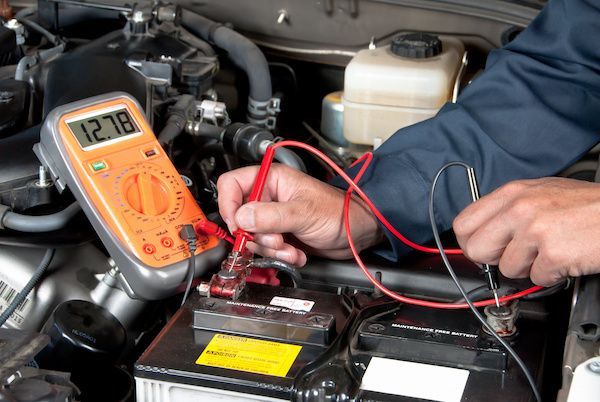
At our shop, we aim to reproduce the change in pedal effort and follow the system from there. Vacuum testing, check-valve checks, pedal response, hydraulic condition, and a road test can separate a brake-assist problem from a mechanical or hydraulic one without replacing parts just because they are nearby.
Get Hard Brake Pedal Diagnostics In St. Charles, MO, With Sparks Tire & Auto
If your brake pedal takes more effort than it used to,
Sparks Tire & Auto in St. Charles, MO, can check the brake booster, vacuum supply, hoses, hydraulic system, calipers, and related components to find the cause.
Contact us to schedule a brake system check and have the harder pedal diagnosed before it affects how confidently you can stop the vehicle.